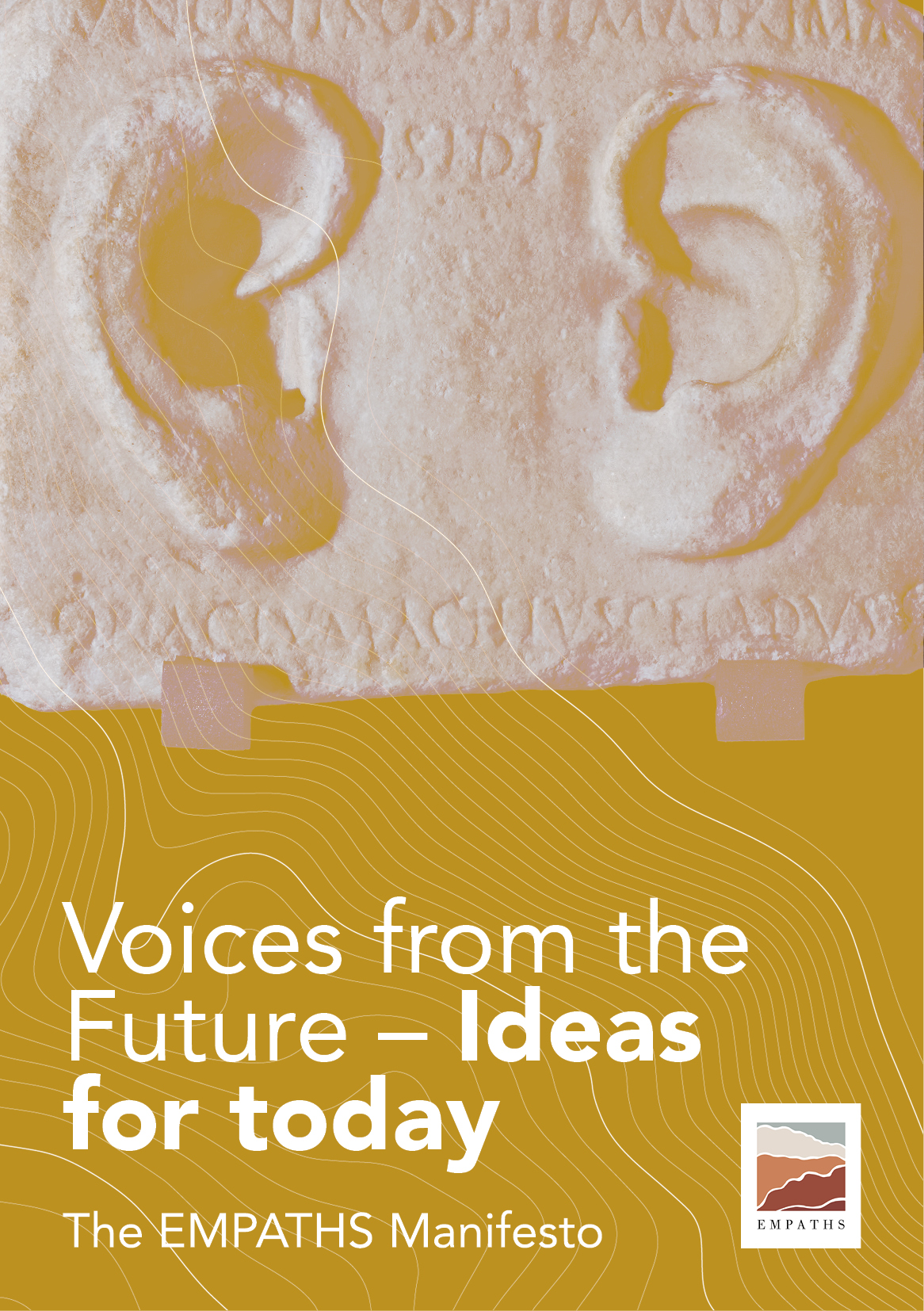
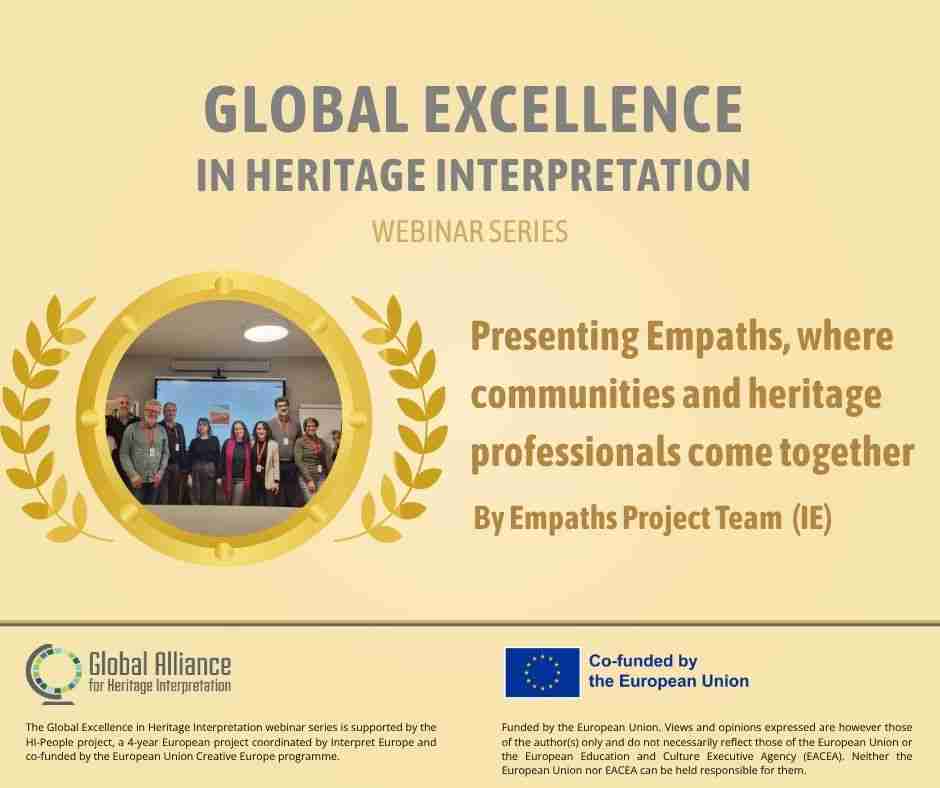
On 27 November, the EMPATHS Project team was delighted to present our work as part of the Global Excellence in Heritage Interpretation (GAHI) Webinar Series, organised by the Global Alliance for Heritage Interpretation. The online event brought together interpreters, heritage professionals, and community practitioners from around the world for a rich and engaging exchange.
The webinar focused on Empaths – where communities and heritage professionals come together, addressing a key challenge in heritage interpretation today. While policies consistently emphasise the importance of community participation in heritage interpretation, many professionals still struggle to apply participatory approaches effectively in practice. Our session explored how the Empaths Project is responding to this gap.
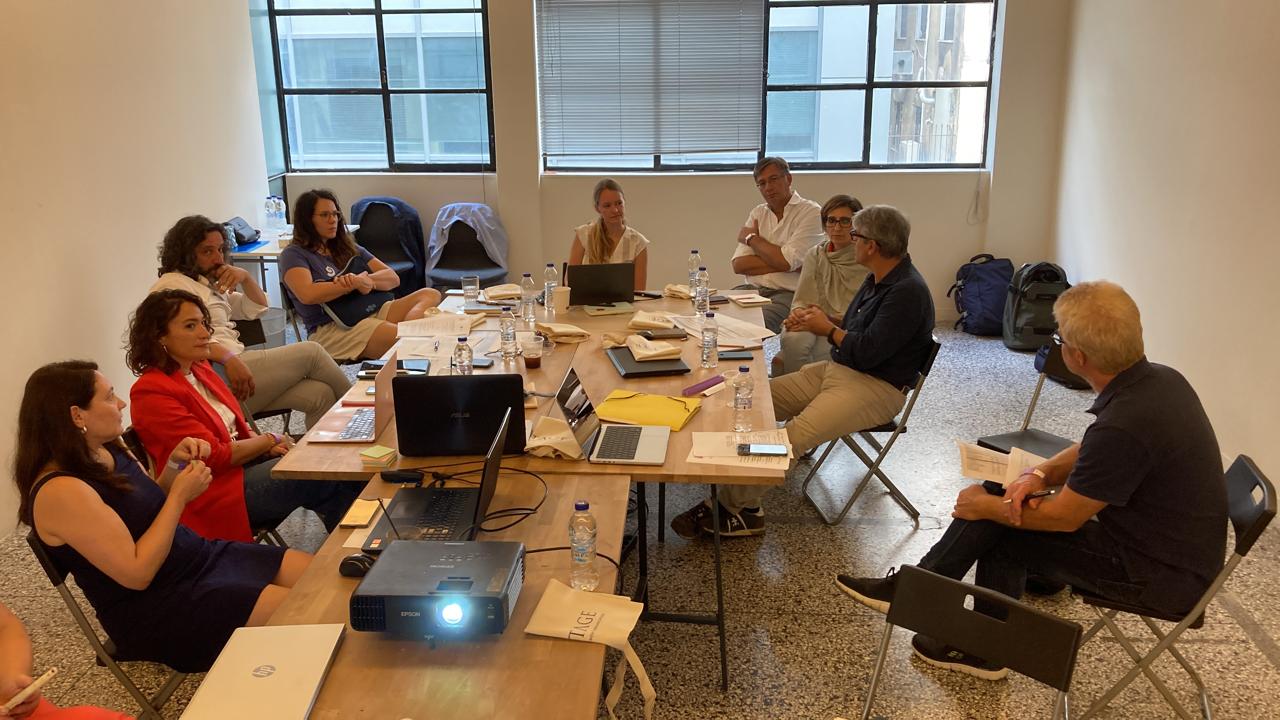
During a lively panel discussion, the project team shared the aims, progress, and early insights from the Empaths initiative. We discussed how, alongside its established training programme, Interpret Europe has teamed up with partners in Greece, Italy, and Austria in a two-year Erasmus+-funded project to design and test an innovative online and onsite training programme. This programme is intended to strengthen the skills and competencies heritage professionals need to facilitate meaningful participation and engagement.
The presentation also highlighted key lessons learned so far and outlined the next steps, as the project prepares to pilot the training programme in three very different territories during 2026.
The Empaths partnership brings together a diverse and experienced consortium:
-
Interpret Europe, working with UNESCO Global Geopark Karawanken–Karavanke on the Austria–Slovenia border
-
Greek professional training provider HERITΛGE, in partnership with the Ethnological Museum of Thrace
-
The Story Behind, an Italian consultancy specialising in ethical branding, storytelling, and heritage interpretation, teamed with the Archaeological Park of Campi Flegrei near Naples
We would like to thank the Global Alliance for Heritage Interpretation and all participants who joined the webinar, contributed questions, and shared their perspectives. The discussion reaffirmed the strong international interest in participatory heritage interpretation and the need for practical, people-centred training approaches.